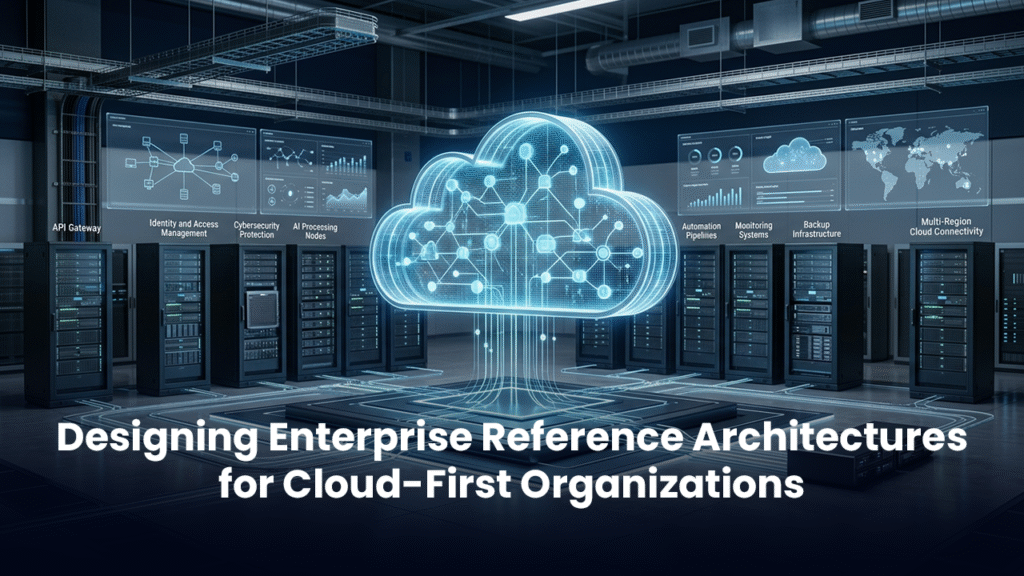
As enterprises continue to adopt cloud technologies, managing increasingly complex infrastructure has become a major challenge. Organizations now operate large scale environments built on microservices, containers, APIs, and distributed systems.
While cloud platforms provide powerful capabilities, they also introduce operational complexity for development and engineering teams.
Developers often spend significant time managing infrastructure, configuring environments, and resolving operational issues instead of focusing on building applications.
This is where platform engineering has emerged as a critical discipline in modern cloud architecture.
Platform engineering focuses on building internal platforms that provide standardized tools, automation, and infrastructure capabilities that developers can use easily and efficiently.
By creating reusable infrastructure components and self service environments, platform engineering enables organizations to scale cloud adoption while maintaining consistency, security, and operational efficiency.
What Is Platform Engineering
Platform engineering is the practice of designing and building internal platforms that support application development and deployment across cloud environments.
These platforms are typically delivered as internal developer platforms that provide developers with a unified interface for accessing infrastructure, tools, and services.
Instead of configuring infrastructure manually, developers can use pre built templates and automated workflows provided by the platform.
A platform engineering team typically creates reusable capabilities such as:
- Infrastructure provisioning tools
- Application deployment pipelines
- Container orchestration platforms
- Security and compliance automation
- Observability and monitoring systems
The goal is to reduce operational complexity while enabling faster and more reliable software delivery.
Why Platform Engineering Is Important for Modern Cloud Architecture
Modern cloud architectures rely on distributed systems, container platforms, and automated pipelines.
Managing these environments manually becomes increasingly difficult as organizations scale.
Platform engineering helps enterprises solve several important challenges.
Improving Developer Productivity
Developers often spend time configuring environments or managing infrastructure dependencies.
Platform engineering provides self service tools that allow developers to deploy applications quickly without managing underlying infrastructure.
Standardizing Cloud Environments
Different teams may deploy applications using inconsistent configurations, which can lead to security and operational risks.
Platform engineering establishes standardized infrastructure templates and best practices.
Reducing Operational Complexity
Automated platforms simplify complex infrastructure management tasks such as resource provisioning, environment configuration, and deployment management.
Strengthening Security and Compliance
Security policies and compliance controls can be integrated directly into the platform, ensuring that all deployments follow organizational standards.
Key Components of Platform Engineering
Platform engineering teams build systems that enable scalable cloud operations.
Several components are commonly included in modern platform engineering frameworks.
Internal Developer Platforms
An internal developer platform is the foundation of platform engineering.
It provides developers with self service access to infrastructure, tools, and deployment pipelines.
Key capabilities often include:
- Application deployment templates
- Infrastructure provisioning automation
- Container orchestration environments
- Development environment management
Internal developer platforms simplify the development process while ensuring consistency across teams.
Infrastructure as Code
Infrastructure as Code allows teams to manage infrastructure using code based configurations.
Platform engineering teams use Infrastructure as Code tools to create standardized infrastructure templates.
These templates enable developers to deploy environments quickly and reliably.
Automation and Continuous Delivery
Automation is essential for efficient cloud operations.
Platform engineering platforms often include automated pipelines that support:
- Continuous integration
- Continuous delivery
- Automated testing
- Deployment validation
Automation reduces manual errors and accelerates software delivery.
Observability and Monitoring
Modern applications require continuous monitoring to ensure reliability and performance.
Platform engineering teams implement observability systems that track metrics such as application performance, system health, and infrastructure usage.
These insights help teams identify issues quickly and maintain service reliability.
Platform Engineering vs DevOps
Platform engineering and DevOps are closely related but serve different purposes.
DevOps focuses on improving collaboration between development and operations teams. It encourages practices such as continuous integration, automation, and rapid deployment cycles.
Platform engineering builds on DevOps principles but introduces a more structured approach to infrastructure management.
Rather than requiring every development team to manage its own infrastructure, platform engineering creates centralized platforms that provide reusable services.
In this model, platform engineering teams maintain the platform while development teams focus on building applications.
This approach improves scalability and reduces operational overhead for development teams.
Benefits of Platform Engineering for Enterprises
Enterprises adopting platform engineering gain several important advantages.
Faster Software Delivery
Developers can deploy applications quickly using standardized platform tools and automated pipelines.
Improved System Reliability
Standardized infrastructure reduces configuration errors and improves system stability.
Greater Operational Efficiency
Automation and reusable templates eliminate repetitive infrastructure tasks.
Stronger Security Controls
Security policies can be integrated into the platform to ensure consistent compliance across environments.
Better Developer Experience
Providing developers with self service platforms improves productivity and reduces friction during the development process.
Platform Engineering in Enterprise Cloud Architecture
Platform engineering plays a critical role in designing scalable cloud environments.
In enterprise cloud architecture, platform engineering teams often manage shared infrastructure platforms that support multiple development teams.
These platforms may include services such as:
- Kubernetes based container platforms
- API management systems
- CI CD pipelines
- Logging and monitoring platforms
- Identity and access management services
By centralizing these capabilities, organizations reduce duplication of effort and maintain consistent infrastructure standards.
This approach allows enterprises to scale cloud operations more effectively.
Challenges of Implementing Platform Engineering
Although platform engineering provides significant benefits, organizations may encounter challenges when adopting this model.
Organizational Change
Shifting from traditional infrastructure management to platform engineering requires cultural and operational changes.
Platform Design Complexity
Building a robust internal developer platform requires careful planning and architectural expertise.
Skills and Expertise
Organizations need engineers with expertise in cloud infrastructure, automation, and developer experience design.
Platform Maintenance
Internal platforms require ongoing maintenance and improvement to support evolving development needs.
Despite these challenges, many enterprises consider platform engineering essential for managing modern cloud environments.
Best Practices for Implementing Platform Engineering
Organizations planning to adopt platform engineering should follow several best practices.
Focus on Developer Experience
The platform should simplify development workflows and provide intuitive interfaces for developers.
Start with Core Capabilities
Begin with essential services such as infrastructure provisioning, deployment pipelines, and monitoring systems.
Implement Strong Governance
Ensure that platform tools enforce security policies and compliance standards automatically.
Encourage Collaboration
Platform teams should work closely with development teams to understand their needs and improve platform usability.
How Cloudserv Helps Enterprises Build Platform Engineering Capabilities
Building a successful platform engineering framework requires deep expertise in cloud infrastructure, automation, and developer platforms.
Cloudserv helps organizations design and implement scalable platform engineering solutions that support modern cloud architectures.
Cloudserv services include:
- Internal developer platform design and implementation
- Kubernetes platform engineering solutions
- DevOps automation and CI CD pipeline implementation
- Cloud infrastructure standardization
- Observability and monitoring platform deployment
By combining cloud architecture expertise with platform engineering best practices, Cloudserv helps enterprises create scalable platforms that accelerate software development while maintaining operational control.
Key Takeaways
Modern cloud architectures require scalable infrastructure management, automation, and standardized deployment environments.
Platform engineering provides a structured approach to building internal platforms that simplify infrastructure management and improve developer productivity.
Enterprises that adopt platform engineering can achieve:
- Faster software delivery cycles
- Consistent infrastructure standards
- Improved security and compliance
- Greater operational efficiency
- Better developer experience
By integrating platform engineering into cloud architecture strategies, organizations can scale cloud innovation while maintaining control and reliability.
Frequently Asked Questions
What is platform engineering
Platform engineering is the practice of building internal platforms that provide developers with standardized tools, infrastructure automation, and deployment capabilities.
How is platform engineering different from DevOps
DevOps focuses on collaboration between development and operations teams, while platform engineering creates centralized platforms that simplify infrastructure management for developers.
Why is platform engineering important for cloud environments
Platform engineering reduces operational complexity, standardizes infrastructure, and improves developer productivity in large scale cloud environments.
What is an internal developer platform
An internal developer platform is a self service platform that provides developers with tools and infrastructure capabilities needed to build, deploy, and manage applications.