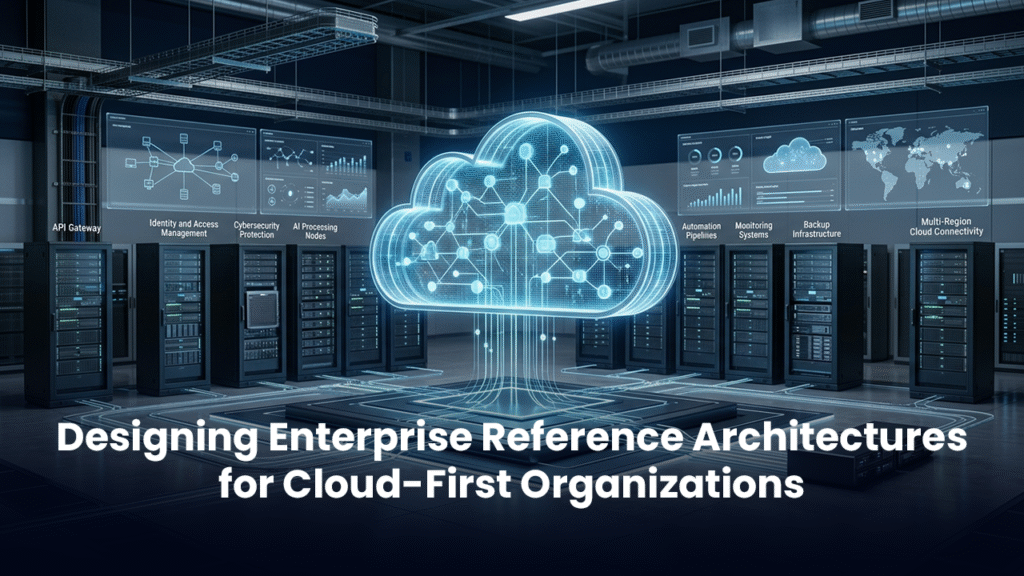
As enterprises continue to embrace cloud computing, AI, and hybrid IT environments, infrastructure demands are becoming increasingly dynamic. Business-critical applications require high availability, AI workloads consume significant computing resources, and customer expectations leave little room for downtime or performance issues. In this environment, simply adding more infrastructure is no longer a sustainable solution.
Organizations need a strategic approach to ensure their infrastructure can meet current business needs while remaining prepared for future growth. This is where a capacity management framework becomes essential.
Capacity management helps enterprises plan, monitor, and optimize infrastructure resources to maintain performance, reduce operational risks, and control costs. Rather than reacting to resource shortages or performance bottlenecks, businesses can proactively align infrastructure capacity with evolving workloads and business objectives.
What Is Capacity Management?
Capacity management is the process of ensuring that IT infrastructure has the right amount of compute, storage, networking, and cloud resources to support business operations efficiently.
Its objective is to balance performance and cost. Under-provisioning infrastructure can lead to outages and poor user experiences, while over-provisioning results in unnecessary expenses and underutilized resources.
A structured capacity management framework enables organizations to:
- Forecast future infrastructure needs
- Monitor resource utilization
- Improve workload performance
- Optimize cloud spending
- Support business growth without service disruptions
For enterprises managing hybrid or multi-cloud environments, capacity management has become a critical part of operational excellence.
Why Capacity Management Matters
Modern enterprise infrastructure is constantly changing. New applications are deployed, user traffic fluctuates, data volumes increase, and AI initiatives introduce GPU-intensive workloads. Without continuous planning, infrastructure can quickly become inefficient.
Common challenges organizations face include:
- Unexpected performance degradation during peak demand
- Rising cloud infrastructure costs
- Resource shortages affecting critical applications
- Idle infrastructure that increases operational expenses
- Difficulty scaling services during business growth
A mature capacity management strategy helps organizations anticipate these challenges rather than reacting after they affect operations.
Key Components of a Capacity Management Framework
An effective capacity management framework combines planning, monitoring, forecasting, and optimization into a continuous process.
Capacity Planning
Capacity planning involves evaluating current infrastructure and estimating future resource requirements based on business growth and workload trends.
This includes assessing:
- Compute capacity
- Storage requirements
- Network bandwidth
- Database performance
- AI and GPU resource demands
Instead of making infrastructure decisions based on assumptions, enterprises use historical performance data and business forecasts to make informed investment decisions.
Continuous Resource Monitoring
Visibility into infrastructure performance is essential for effective capacity management.
Organizations should continuously monitor key metrics such as CPU utilization, memory usage, storage consumption, network throughput, and application performance.
Real-time monitoring enables IT teams to identify potential bottlenecks before they affect business operations.
It also provides valuable insights into which resources are underutilized and where optimization opportunities exist.
Demand Forecasting
Business requirements rarely remain constant. Seasonal traffic, product launches, mergers, customer growth, and AI adoption can all increase infrastructure demand.
Demand forecasting uses historical usage patterns and business projections to estimate future capacity requirements.
Accurate forecasting helps organizations provision infrastructure proactively, reducing the risk of both service disruptions and unnecessary spending.
Optimizing Infrastructure Utilization
One of the primary goals of capacity management is maximizing resource efficiency.
Many enterprises discover that a significant portion of their infrastructure operates below optimal utilization levels. Virtual machines, storage resources, and cloud instances often remain active even when workloads decrease.
Regular utilization analysis allows organizations to:
- Identify idle resources
- Right-size cloud instances
- Consolidate workloads
- Improve resource allocation
- Eliminate unnecessary infrastructure costs
These optimizations improve operational efficiency while maintaining service performance.
Capacity Management in Cloud Environments
Cloud computing has transformed how enterprises manage infrastructure capacity.
Unlike traditional on-premises environments, cloud platforms offer the ability to scale resources on demand. However, this flexibility also introduces new challenges.
Without proper governance, cloud environments can experience uncontrolled resource growth, leading to unexpected costs.
A cloud-focused capacity management strategy should include:
- Auto-scaling policies
- Resource right-sizing
- Utilization tracking
- Reserved instance planning
- Multi-region capacity management
By continuously reviewing cloud resource usage, organizations can improve both performance and cost efficiency.
Planning for AI Workloads
Artificial intelligence is changing infrastructure planning across industries.
AI applications require specialized resources such as GPUs, high-performance storage, and low-latency networking. Unlike traditional business applications, AI workloads often experience unpredictable demand based on model training, inference requests, and data processing requirements.
Organizations adopting AI should include the following in their capacity planning process:
- GPU utilization monitoring
- Storage growth for training data
- AI inference demand forecasting
- Resource allocation for large language models
- Performance monitoring for AI services
Including AI infrastructure in long-term planning helps prevent resource shortages while controlling operational costs.
Automation Improves Capacity Management
Manual infrastructure management becomes increasingly difficult as enterprise environments grow.
Automation enables organizations to respond more quickly to changing workloads by automatically adjusting infrastructure based on predefined policies.
Common automation capabilities include:
- Dynamic resource scaling
- Automated workload balancing
- Infrastructure provisioning
- Capacity alerts
- Performance optimization
Automation reduces administrative effort while improving responsiveness and infrastructure efficiency.
Best Practices for Building a Mature Capacity Management Strategy
Organizations looking to strengthen their capacity management practices should focus on several key principles:
- Continuously monitor infrastructure utilization instead of relying on periodic reviews.
- Align capacity planning with business objectives and projected growth.
- Use historical data to improve forecasting accuracy.
- Incorporate AI and cloud workloads into long-term infrastructure planning.
- Automate resource scaling wherever possible.
- Regularly review infrastructure performance and optimization opportunities.
- Integrate capacity management with cloud cost optimization and operational monitoring.
These practices enable enterprises to make proactive decisions rather than responding to infrastructure challenges after they occur.
Conclusion
As enterprise infrastructure becomes increasingly distributed across cloud platforms, hybrid environments, and AI ecosystems, effective capacity management is no longer optional. Organizations must ensure they have sufficient resources to support business growth while avoiding unnecessary infrastructure costs.
A well-designed capacity management framework combines planning, monitoring, forecasting, automation, and continuous optimization to improve both operational efficiency and business resilience.
By adopting a proactive approach, enterprises can reduce performance bottlenecks, optimize cloud spending, improve infrastructure utilization, and build a scalable foundation capable of supporting future innovation. In an era where agility and reliability are essential, capacity management has become a key driver of long-term enterprise success.