The average enterprise decision takes 3–5 people, 2–4 handoffs, and anywhere from hours to weeks depending on how many inboxes it has to survive.
That’s not a people problem. It’s an architecture problem. And real-time AI workflows are solving it at the infrastructure level, not the process consulting level.
This isn’t about replacing humans with AI. It’s about removing the wait that states the moments where a decision is sitting in a queue, waiting for a human to rubber-stamp something that could have been handled automatically, with better data, in under a second.
Here’s what’s actually happening inside enterprises that are getting this right.
What Is a Real-Time AI Workflow?
A real-time AI workflow is an orchestrated sequence of automated decision steps where AI models process inputs, evaluate conditions, and trigger actions without requiring a human in the loop for each step.
The key word is real-time. Not batch processing that runs overnight. Not a weekly report that surfaces patterns after the damage is done. Decisions that happen at the moment the relevant signal arrives.
The architecture typically involves three layers working together: an event stream (what just happened), an AI reasoning layer (what should be done about it), and an action layer (execute the decision and log it).
The human role shifts from making every decision to defining the decision logic, reviewing edge cases, and auditing outputs. That’s a better use of human judgment, not an elimination of it.
Where Decision Bottlenecks Actually Come From
Before fixing bottlenecks, you need to name them accurately. In enterprise operations, bottlenecks cluster in four patterns:
Sequential approval chains. A purchase order needs three sign-offs in sequence — each person waits for the previous to act. Even if each step takes 10 minutes, the chain takes days because no one is monitoring their turn in real time.
Context reassembly overhead. Every handoff requires the next person to reconstruct context reading threads, pulling reports, checking systems. A mid-sized enterprise wastes thousands of hours per year on context that already exists in structured form somewhere in the stack.
Threshold ambiguity. Decisions that look complex but are actually rule-based “approve if supplier score > 80 and contract value < $50K and no open disputes” get escalated to senior staff because the rules were never codified. The complexity is artificial.
Exception flooding. Automated systems flag too many exceptions, routing them to human queues that can’t process them fast enough. Most flagged exceptions follow predictable patterns that AI can resolve without human involvement.
All four are solvable with real-time AI workflows. None of them require organizational restructuring to fix.
Five Enterprise Operations Where This Is Already Working
1. Supply Chain Decision Automation
Real-time AI workflows are processing supplier risk signals delivery delays, quality scores, geopolitical flags, pricing anomalies and autonomously adjusting purchase orders, rerouting shipments, or escalating to procurement leads only when a genuine exception exists.
Maersk, DHL, and major automotive OEMs have all published results showing significant reductions in supply chain decision latency. The pattern: AI handles the 80% of decisions that are rule-resolvable; humans handle the 20% that require judgment.
2. Financial Services Exception Processing
In banking and insurance, compliance exceptions flagged transactions, underwriting edge cases, claims anomalies used to sit in analyst queues for 24–72 hours. AI workflow systems now triage, classify, and resolve the majority of exceptions in real time, routing only genuinely ambiguous cases to human reviewers.
JPMorgan’s COIN platform which processes commercial loan agreements is one of the most cited examples: work that took lawyers 360,000 hours annually now happens in seconds. The decisions aren’t lower quality; they’re faster and more consistent.
3. IT Operations and Incident Response
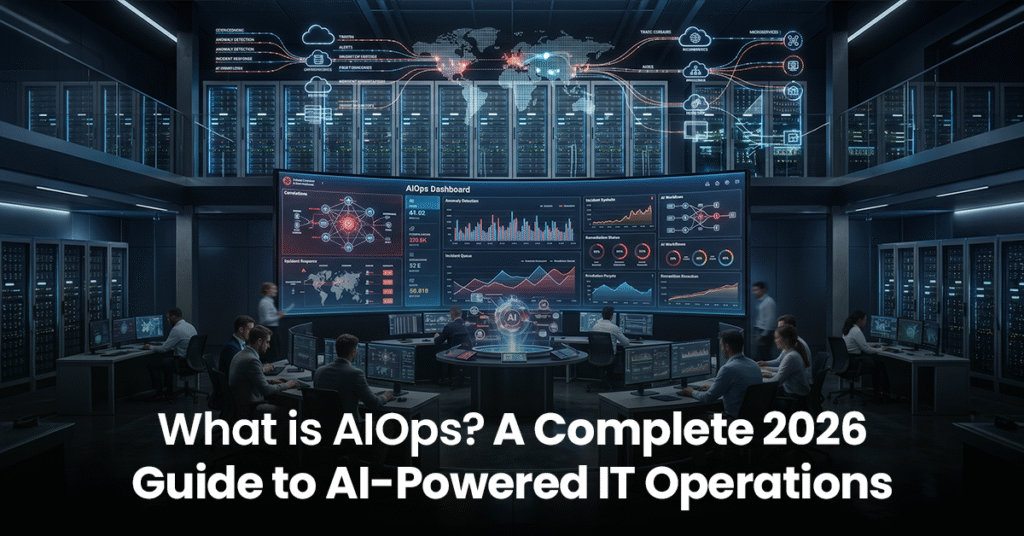
AIOps platforms are the clearest enterprise example of real-time AI workflows applied to operations. When an infrastructure alert fires, the AI workflow doesn’t just notify someone, it correlates the alert with related signals, checks historical patterns, determines probable cause, and either auto-remediates or generates a fully contextualized incident brief for on-call engineers.
Mean time to resolution (MTTR) drops because humans are entering the decision process at the right moment with full context rather than starting from scratch at 2am.
4. HR and Talent Operations
Candidate screening, interview scheduling, offer letter generation, and onboarding workflows are being automated end-to-end at large enterprises. The AI workflow handles routing, communication, and document generation; human recruiters focus on relationship and final decisions.
Workday and ServiceNow both have real-time AI workflow capabilities embedded in their enterprise platforms adoption is accelerating in HR ops specifically because the decisions are high-volume but structurally consistent.
5. Customer Operations
Real-time AI workflows in customer service don’t just route tickets. They read the ticket, access the customer’s account history, check policy rules, draft a resolution, and either send it autonomously (for straightforward cases) or present it to an agent pre-built for one-click approval. Handle time collapses. Customer wait time drops.
Salesforce Agentforce and Zendesk’s AI tier are both built on this model the agent doesn’t start from zero, they inherit a decision that’s 90% complete.
The Architecture Behind Real-Time AI Workflows
Understanding what makes these systems work helps you evaluate whether your current stack can support them.
Event streaming layer. Kafka, AWS Kinesis, or Google Pub/Sub something that captures real-time signals from your systems of record and makes them available to the AI layer without batch delay. If your data is still living in nightly ETL jobs, real-time decisions aren’t possible yet.
Orchestration layer. Tools like Temporal, Prefect, or AWS Step Functions manage the workflow logic sequencing, retrying, branching, and handling failures. Without a proper orchestrator, AI workflows become brittle scripts that break on exceptions.
AI reasoning layer. This is where LLMs, classification models, or rule engines evaluate the event and produce a decision or recommendation. The key engineering requirement: the reasoning must be deterministic enough for audit and fast enough for real-time response. Pure LLM reasoning without structured output validation is too unpredictable for high-stakes decisions.
Action and integration layer. APIs, webhooks, and RPA connectors that execute the decision in downstream systems updating a record, sending a notification, triggering a purchase order, closing a ticket.
Audit and observability layer. Every decision must be logged input, reasoning trace, output, timestamp, confidence score, and which human (if any) reviewed it. This is non-negotiable for compliance and for continuous improvement of the workflow.
What Works and What Fails
What works:
Decisions that are high-volume, structurally consistent, and have clear resolution criteria are the ideal candidates. Automating 1,000 decisions per day that each follow the same 5-rule logic is where real-time AI workflows deliver the most ROI.
Starting narrow one workflow, one process, one team and proving value before expanding. The enterprises that win with this are disciplined about scope.
Human-in-the-loop as a design feature, not an afterthought. Build escalation paths from day one. The system should know what it doesn’t know and route accordingly.
What fails:
Trying to automate decisions that are genuinely ambiguous or require contextual judgment that can’t be codified. Automating a creative brief approval or a strategic vendor partnership decision will produce garbage outputs and destroy trust in the system.
Deploying AI workflows without audit trails. Regulators and internal audit teams will ask “how was this decision made?” If the answer is “the AI decided,” with no traceable reasoning, you have a compliance problem regardless of whether the decision was correct.
Skipping the data infrastructure step. If the inputs to the AI workflow are stale, incomplete, or inconsistent, the decisions will be too. Real-time AI workflows are only as good as the real-time data feeding them.
How to Identify Your First Bottleneck to Automate
Use this filter to find the right starting point:
First, map your highest-volume decision processes. Look for anything where the same type of decision happens more than 50 times per week.
Second, check how much of each decision is rule-resolvable. If more than 70% of cases follow a consistent pattern, it’s automatable.
Third, assess the cost of delay. If a 4-hour decision delay creates downstream costs, missed SLAs, idle resources, customer churn, the ROI on automation is easier to justify.
Fourth, evaluate data availability. The signals the AI needs to make the decision must exist in accessible, structured form. If key inputs live in PDFs, email threads, or someone’s head, you have a data problem to solve first.
The highest-priority candidate is the one with the most volume, most rule-resolvable logic, highest delay cost, and cleanest data. That’s where you start.
The Organizational Shift
The harder change isn’t technical, it’s cultural. Knowledge workers whose value was tied to being the decision-maker in a process need to shift to being the decision-designer and exception-handler.
That’s not a demotion. Designing the decision logic that an AI workflow executes requires deeper understanding of the domain than rubber-stamping individual cases ever did. The people who thrive in this shift are the ones who understand the “why” behind the rules they’ve been applying, not just the ones who can apply them fast.
The enterprises getting ahead of this are actively retraining operations staff in workflow design, exception analysis, and AI output evaluation. Those skills will define the next tier of operational excellence.
The Bottom Line
Decision bottlenecks are a structural tax on enterprise speed. Every hour a decision sits in a queue is an hour of value destroyed delayed shipments, missed revenue, unresolved customer issues, idle engineering capacity.
Real-time AI workflows don’t eliminate human judgment. They eliminate the wait states where human judgment isn’t actually being applied just queued up.
The enterprises moving fastest right now aren’t doing more hiring. They’re doing better orchestration.
Frequently Asked Questions
Q1: What’s the difference between RPA and real-time AI workflows?
RPA automates fixed, rule-based tasks with no judgment. Real-time AI workflows include a reasoning layer the system evaluates context, handles variation, and makes decisions, not just task completions.
Q2: How do you maintain compliance when AI is making autonomous decisions?
Every decision must have a full audit trail input, reasoning trace, output, and timestamp. AI workflows in regulated industries should also include confidence thresholds below which decisions are automatically escalated to humans.
Q3: What’s the biggest technical prerequisite most enterprises are missing?
Real-time event streaming infrastructure. Most enterprises still rely on batch data pipelines, which makes real-time decision-making architecturally impossible regardless of how good the AI layer is.
Q4: Can small teams build this, or does it require a dedicated platform team?
Start with managed services AWS Step Functions, Temporal Cloud, or embedded AI workflow tools in platforms like Salesforce or ServiceNow. A dedicated platform team becomes necessary once you have 5+ active workflows or cross-system complexity.
Q5: How long does it take to see ROI on the first AI workflow automation?
For high-volume, rule-heavy processes, measurable ROI typically appears within 60–90 days of deployment. The value compounds as the workflow handles more volume and the exception rate decreases with iteration.