In 2026, the way enterprises manage production systems is undergoing a fundamental transformation. Traditional runbooks, once the backbone of IT operations are being replaced by intelligent, adaptive systems powered by AI in DevOps and AIOps. As infrastructures become more distributed and complex, static human-written playbooks are no longer sufficient to handle real-time challenges.
What Are Runbooks and Why Were They Important?
Runbooks have historically served as structured operational guides that outline how to handle recurring tasks and incidents in production environments.
Key Functions of Runbooks:
- Standardizing Incident Response Across Teams Runbooks ensured that all team members followed a consistent, step-by-step approach when dealing with incidents, reducing ambiguity and maintaining operational uniformity across different shifts and teams.
- Reducing Dependency on Individual Expertise By documenting processes in detail, runbooks made it easier for less experienced engineers to handle issues without relying heavily on senior team members, improving team efficiency and scalability.
- Providing a Reliable Knowledge Base for Operations Runbooks acted as a centralized repository of operational knowledge, capturing lessons learned from past incidents and making them accessible for future troubleshooting.
- Ensuring Compliance and Audit Readiness Many industries relied on runbooks to demonstrate standardized procedures and compliance with regulatory requirements, especially in sectors like finance and healthcare.
Why Runbooks Are Failing in 2026
Despite their historical importance, runbooks are increasingly ineffective in modern production environments.
1. Increasing System Complexity
- Modern Architectures Are Highly Distributed and Interconnected With the rise of microservices, containerization, and multi-cloud environments, systems now consist of hundreds or thousands of interconnected components, making it difficult for static runbooks to cover every possible scenario.
- Dynamic Infrastructure Changes Make Documentation Outdated Quickly Frequent deployments, scaling events, and infrastructure updates mean that runbooks can become obsolete within days or even hours, leading to inaccurate guidance during critical incidents.
2. Slower Incident Response
- Manual Execution Creates Delays in Critical Situations Engineers must read, interpret, and execute runbook steps, which consumes valuable time during outages where every second impacts business operations.
- Sequential Processes Limit Real-Time Decision Making Runbooks typically follow a linear approach, which does not align with the parallel and dynamic nature of modern systems, slowing down resolution efforts.
3. Lack of Real-Time Adaptability
- Runbooks Are Based on Historical Scenarios, Not Emerging Issues They are designed using past incidents, which makes them ineffective when dealing with new or unknown failure patterns.
- Inability to Adjust to Changing System Conditions Automatically Runbooks cannot respond to real-time metrics, anomalies, or environmental changes, requiring human intervention for adjustments.
4. Human Dependency and Errors
- Reliance on Human Judgment Introduces Variability Different engineers may interpret the same runbook differently, leading to inconsistent outcomes.
- High Risk of Mistakes Under Pressure During high-severity incidents, stress and urgency can lead to skipped steps or incorrect execution, increasing downtime and risk.
The Rise of AI in Production Operations
AI is transforming IT operations by introducing automation, intelligence, and adaptability into production systems.
What is AIOps?
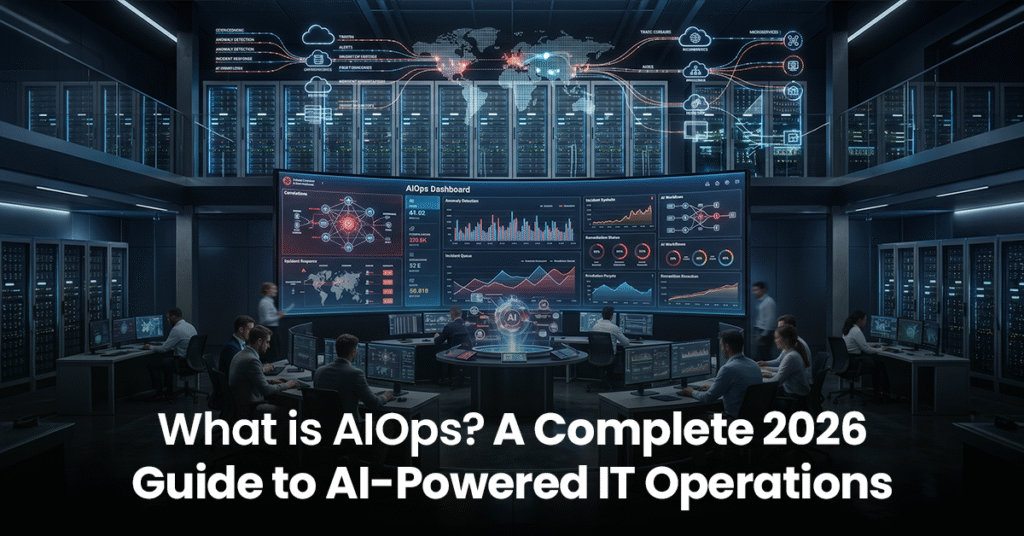
AIOps (Artificial Intelligence for IT Operations) leverages machine learning and advanced analytics to:
- Continuously Monitor Systems and Detect Anomalies in Real Time AI systems analyze vast amounts of telemetry data, including logs, metrics, and traces, to identify unusual patterns before they escalate into major incidents.
- Predict Potential Failures Before They Occur By learning from historical data, AI can forecast issues such as resource exhaustion, performance degradation, or system failures.
- Automate Root Cause Analysis and Remediation AI can quickly pinpoint the underlying cause of a problem and initiate corrective actions without requiring manual intervention.
How AI Is Replacing Runbooks
1. Automated Incident Detection and Diagnosis
- Real-Time Monitoring Eliminates the Need for Manual Checks AI continuously scans system behavior, identifying anomalies instantly without waiting for human observation.
- Faster and More Accurate Root Cause Identification Machine learning models can correlate data across multiple systems, reducing the time required to diagnose complex issues.
2. Self-Healing Systems
- Automatic Execution of Corrective Actions Without Human Input AI can restart services, reallocate resources, or trigger failovers as soon as an issue is detected.
- Continuous System Stability Through Proactive Interventions Instead of reacting to failures, systems can prevent them by taking preemptive actions based on predictive insights.
3. Dynamic Decision-Making
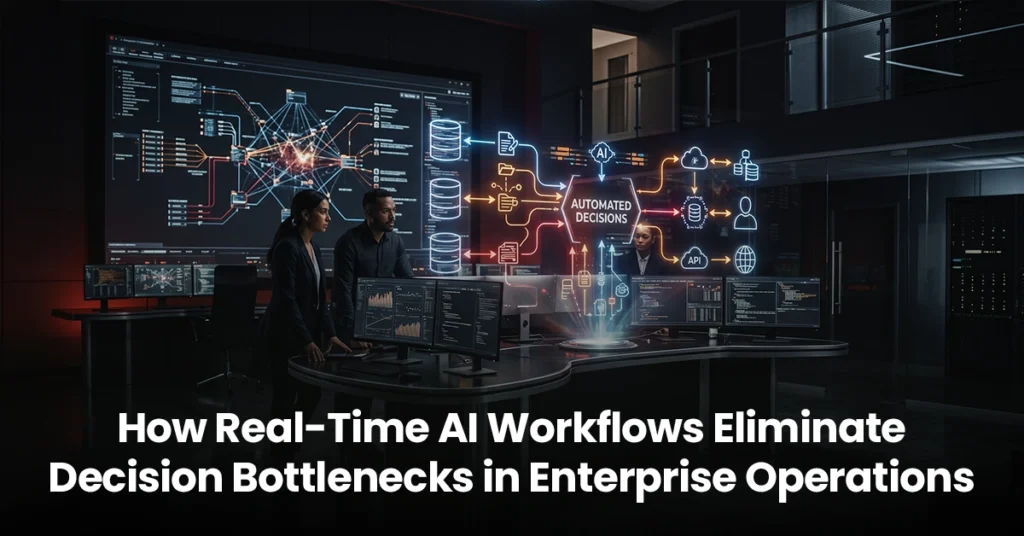
- Context-Aware Responses Based on Real-Time Data AI systems evaluate current conditions before deciding on the best course of action, unlike static runbooks that follow predefined steps.
- Adaptive Strategies That Evolve Over Time Decisions improve as the system learns from new data and past outcomes, making operations more efficient and reliable.
4. Continuous Learning and Improvement
- Learning from Every Incident to Improve Future Responses AI systems refine their models using data from resolved incidents, enhancing accuracy and efficiency over time.
- Reducing Repetition of Known Issues Through Intelligent Automation Once a problem is identified and solved, AI ensures it is handled automatically if it occurs again.
Benefits of AI-Driven Operations
Faster Incident Resolution
- Significant Reduction in Mean Time to Detect (MTTD) and Resolve (MTTR) AI enables immediate detection and rapid remediation, minimizing downtime and business impact.
Reduced Operational Costs
- Lower Dependence on Large Operations Teams for Routine Tasks Automation reduces the need for manual monitoring and intervention, allowing teams to focus on strategic initiatives.
Improved System Reliability
- Consistent Performance Through Proactive Monitoring and Self-Healing AI ensures systems remain stable and resilient even under high load or unexpected conditions.
Scalability
- Ability to Manage Large-Scale Environments Without Additional Human Resources AI systems can handle growing infrastructure complexity without requiring proportional increases in staffing.
Challenges of Replacing Runbooks with AI
Trust and Transparency
- Organizations Need Confidence in AI Decision-Making Processes Teams must understand how AI systems make decisions to trust them in critical scenarios.
Implementation Complexity
- Requires Integration of Data Sources, Tools, and Infrastructure Building AI-driven operations involves significant effort in data collection, model training, and system integration.
Skill Gaps
- Demand for Expertise in AI, Cloud, and Data Engineering Organizations must invest in upskilling teams or hiring specialized talent.
Governance and Control
- Ensuring AI Operates Within Defined Boundaries and Policies Clear governance frameworks are necessary to prevent unintended actions.
The Future: From Runbooks to Autonomous Operations
The evolution from runbooks to AI-driven systems marks the beginning of fully autonomous production environments.
What to Expect:
- Self-Healing Infrastructure That Operates Without Human Intervention Systems will automatically detect and resolve issues, ensuring continuous availability.
- AI-Driven DevOps Pipelines With Minimal Manual Oversight Deployment, monitoring, and optimization will be handled by intelligent systems.
- Shift From Reactive to Predictive and Preventive Operations Organizations will prevent incidents rather than responding to them.
Conclusion
The era of static runbooks is coming to an end. In their place, AI-powered operations, AIOps platforms, and autonomous systems are redefining how enterprises manage production environments.
While runbooks will not disappear entirely, their role is evolving into training data and policy frameworks for AI systems. Organizations that embrace this shift will gain a competitive advantage through improved efficiency, reliability, and scalability.
FAQs
1. What is replacing traditional runbooks in 2026?
AI-driven AIOps platforms are replacing runbooks by automating monitoring, incident detection, and resolution processes.
2. Are runbooks still relevant today?
Yes, but their role is evolving. They are increasingly used as inputs for AI systems rather than manual guides.
3. How does AI improve DevOps operations?
AI enhances DevOps by automating repetitive tasks, improving incident response, and enabling predictive maintenance.
4. What are self-healing systems?
Self-healing systems automatically detect and resolve issues without human intervention, ensuring continuous system stability.
5. Is adopting AIOps difficult for enterprises?
It can be complex initially, but with the right strategy and tools, organizations can successfully transition to AI-driven operations.